28KB.avif)

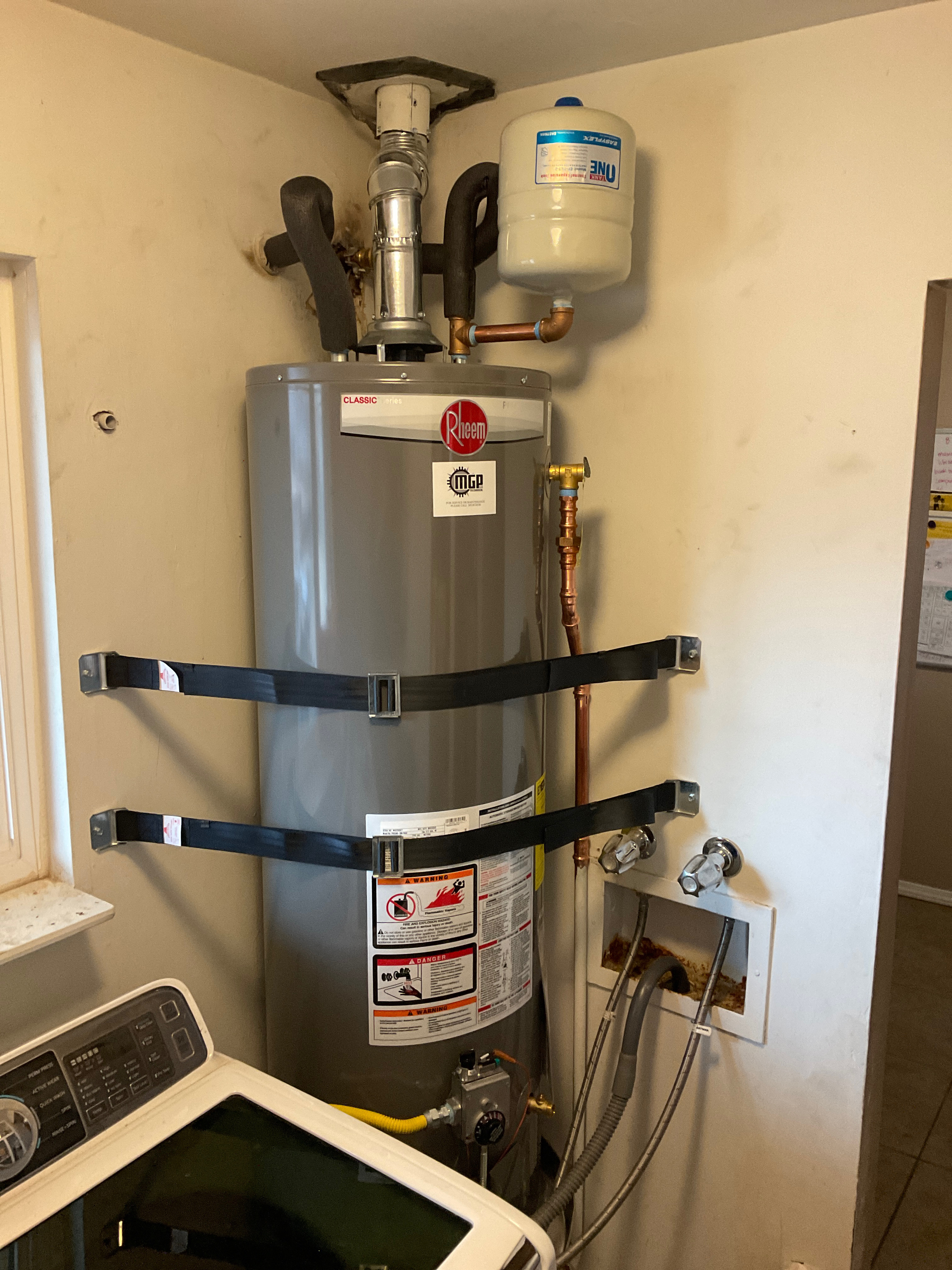
Water Heater Repair vs. Replace: How to Make the Right Call
Your water heater is one of those appliances you don’t think much about—until it stops working. Suddenly, you’re facing cold showers, a sink full of greasy dishes, and a big decision: should you repair it or replace it?
It’s a question we get all the time at MGP Mechanical. And honestly? There’s no one-size-fits-all answer. The right choice depends on your water heater’s age, the type of problem you’re dealing with, and what makes the most financial sense for your situation.
Let’s walk through it together.
Know Your Water Heater’s Age
The first thing we look at is how old your water heater is. Like any appliance, water heaters have a finite lifespan.
Traditional tank water heaters typically last 8 to 12 years with proper maintenance. Some well-maintained units push 15 years, but that’s the exception rather than the rule. Tankless water heaters generally last longer—around 15 to 20 years—thanks to fewer parts that can corrode or fail.
Not sure how old yours is? Check the serial number on the manufacturer’s label (usually on the side of the tank). The first few digits often indicate the manufacture date, though the format varies by brand. If you can’t decode it, give us a call—we’re happy to help you figure it out.
Here’s a general guideline: if your water heater is under 8 years old and experiencing its first problem, repair usually makes sense. If it’s over 10 years old and starting to act up, it’s time to seriously consider replacement.
Warning Signs That Point Toward Repair
Some water heater problems are straightforward fixes that don’t require a full replacement. Here are situations where repair is often the right call:
Inconsistent water temperature. If your water isn’t getting as hot as it used to, or it fluctuates between hot and cold, the issue might be a faulty thermostat or a worn heating element. Both are relatively inexpensive to replace.
Strange noises. Popping, rumbling, or banging sounds coming from your water heater usually indicate sediment buildup at the bottom of the tank. Over time, minerals from our Albuquerque water settle and harden, making it harder for your heating element to do its job. A professional flush can often clear out the sediment and restore efficiency.
Small leaks around fittings. Not all leaks mean disaster. If water is dripping from a valve, connection, or pipe fitting—rather than the tank itself—it can often be repaired by tightening or replacing the faulty component.
Discolored or smelly water. Rusty or metallic-tasting hot water sometimes indicates corrosion inside the tank. But before you panic, the problem might be the anode rod—a sacrificial component designed to attract corrosive elements and protect your tank. Replacing the anode rod (typically every 3 to 5 years) can solve the problem and extend your water heater’s life.
Pilot light issues (gas units). If your pilot light keeps going out, the thermocouple may need replacing. It’s a common fix that’s much cheaper than a new water heater.
Warning Signs That Point Toward Replacement
Other problems are clear indicators that it’s time for a new unit:
The tank itself is leaking. If water is pooling around the base of your water heater and it’s coming from the tank (not a valve or fitting), there’s no fixing it. A leaking tank means the internal structure has failed—usually from years of corrosion—and replacement is your only option.
Frequent repairs. If you’ve called for water heater service multiple times in the past year or two, those repair bills add up. At some point, you’re throwing good money after bad. A common rule of thumb is the “50 percent rule”: if a repair costs more than half what a new water heater would cost, replacement is usually the smarter investment.
Rising energy bills. Older water heaters lose efficiency over time. If your gas or electric bills have been creeping up without an obvious explanation, your water heater might be working harder than it should to heat the same amount of water. Newer models—especially tankless and high-efficiency units—can be 24 to 34 percent more efficient than older tanks.
Not enough hot water. If your household has grown or your hot water needs have changed, your current water heater might simply be undersized. Rather than limping along with a unit that can’t keep up, upgrading to a properly sized system (or going tankless for unlimited hot water) might be the better move.
Rust and corrosion throughout. If you’re seeing rust on the outside of the tank, on the burner compartment (for gas units), or consistently in your hot water, the corrosion has likely spread too far for an anode rod replacement to help.
The Role of the Anode Rod
Here’s something many homeowners don’t know: inside your tank water heater is a component called a “sacrificial anode rod.” It’s a long metal rod—usually made of magnesium or aluminum—that attracts corrosive minerals in the water so they attack the rod instead of your tank.
The key word is “sacrificial.” The rod is designed to corrode over time, and once it’s depleted, your tank becomes vulnerable to rust.
Replacing the anode rod every 3 to 5 years can significantly extend your water heater’s life—sometimes by as much as a decade. It’s one of the most cost-effective maintenance tasks you can do, but it’s also one of the most overlooked.
If your water heater is in the 5 to 8 year range and you’ve never had the anode rod checked, that’s a good place to start before assuming you need a replacement.
Why Hard Water Matters in Albuquerque
Our local water plays a role in all of this. Albuquerque’s water is rated “hard” to “very hard,” depending on your neighborhood and whether your supply comes from surface water or groundwater wells. The soil throughout New Mexico is rich in calcium, magnesium, and iron—minerals that end up in our water and, eventually, in your water heater.
Hard water accelerates sediment buildup, which reduces efficiency and puts extra stress on heating elements. It also speeds up corrosion, which shortens the life of both anode rods and tanks.
This is why regular maintenance—flushing the tank annually and checking the anode rod—is especially important here. And it’s also why many Albuquerque homeowners are considering whole-house water treatment systems to protect their plumbing and appliances.
Repair vs. Replace: The Quick Checklist
Ask yourself these questions:
- Is my water heater more than 10 years old?
- Have I needed repairs more than once in the past year?
- Is the tank itself leaking?
- Have my energy bills increased noticeably?
- Is my water heater struggling to meet my household’s hot water needs?
If you answered “yes” to most of these, replacement is probably your best bet. If you answered “no” to most, a repair might get you several more years of reliable service.
What to Consider When Replacing
If you do decide it’s time for a new water heater, here are a few things to think about:
Tank vs. tankless. Traditional tank water heaters are less expensive upfront, but tankless units offer energy savings, unlimited hot water, and a longer lifespan. For larger households or homes with high hot water demand, tankless can be a great investment.
Fuel type. If you currently have a gas water heater, sticking with gas usually makes sense (and vice versa for electric). Switching fuel types adds significant cost for running new lines.
Size and capacity. A 40 or 50-gallon tank works for most households, but your needs depend on how many people live in your home and how you use hot water. We can help you calculate the right size.
Efficiency ratings. Look for the Uniform Energy Factor (UEF) on the label. Higher numbers mean better efficiency—and lower utility bills over the life of the unit. ENERGY STAR certified models can reduce costs significantly.
Maintenance Tips to Extend Your Water Heater’s Life
Whether you repair or replace, these simple maintenance steps can help you get the most out of your water heater:
- Flush the tank annually to remove sediment buildup
- Test the pressure relief valve once a year to make sure it’s working properly
- Check and replace the anode rod every 3 to 5 years
- Set the temperature to 120°F to prevent overheating and reduce energy use
- Insulate the tank and pipes to improve efficiency and reduce heat loss
We’re Here to Help You Decide
At MGP Mechanical, we’re not here to push you toward a sale. We’re here to help you make the decision that makes the most sense for your home and your budget. Sometimes that’s a $200 repair. Sometimes it’s a new water heater that will serve you well for the next 15 years.
If your water heater is acting up—or if you just want a professional opinion on how much life it has left—give us a call at (505) 917-4130. We’ll take a look, explain your options, and help you make the right call.
Because when it comes to hot water, you shouldn’t have to guess.
MGP Mechanical LLC is a family-owned HVAC and plumbing company serving Albuquerque and the surrounding areas since 2013. We specialize in honest, reliable service that puts our customers first.